 “We love our house and neighborhood, but what do we need to do so we can live here as long as we’re able?”
I get asked this all the time. And it’s a smart question—according to AARP, nearly 90% of adults over 65 want to stay in their current home as they age. But here’s the thing: most homes weren’t designed with that in mind. If you’re already planning a renovation or building new, you can incorporate features now that support you for decades—without making your home feel institutional. At TPD Architecture + Design, our Thrive at Home consulting service helps clients figure out whether their homes will work long-term and what changes might be needed. Whether you work with us or another CAPS-certified professional, here are the key features worth considering. I’ve listed them generally in order of difficulty and expense.
Essential Accessibility Features Checklist
Low-Cost, High-Impact Features
Lever handles on doors and faucets – These require less grip strength than round knobs. They’re available in every style, so they don’t scream “accessible design”—they just look like good hardware.
- Comfort-height toilets: At 17-19 inches instead of the standard 15 inches, these make sitting and standing easier. Install one with an adjacent outlet for future bidet seats if you want, and you’ve future-proofed your bathroom.
- Enhanced LED lighting: Vision changes with age, and good lighting becomes critical. Recessed LED lighting eliminates shadows and provides even illumination. Layer in under-cabinet lighting in kitchens and motion-activated lights in hallways.
- Intuitive technology: WiFi thermostats, touch faucets, voice-controlled lighting. These aren’t just convenient—they become increasingly important as dexterity changes
Mid-Range Modifications
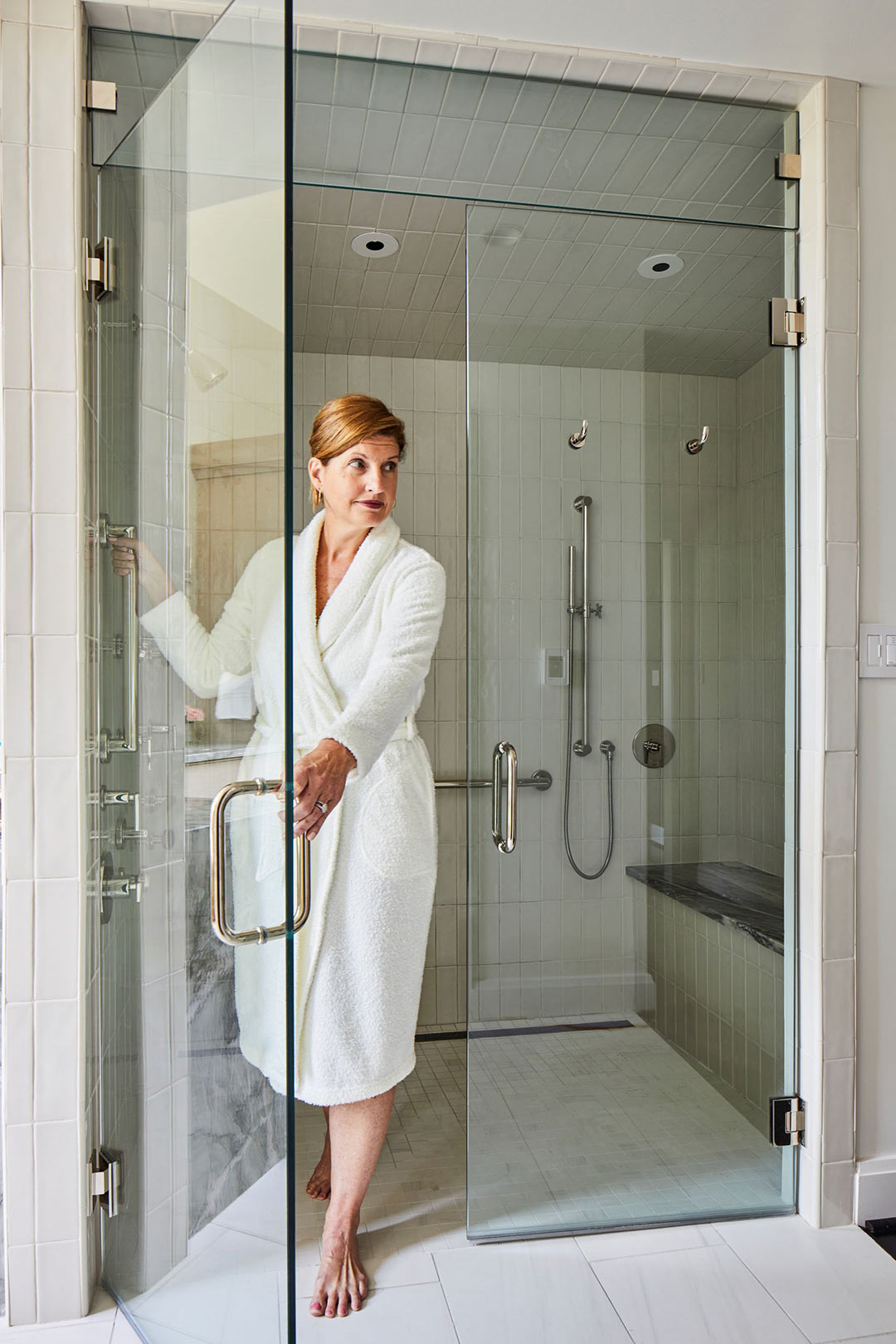
- Slip-resistant flooring: Falls are the leading cause of injury for older adults, and bathrooms are high-risk. The key is selecting beautiful materials that happen to be safe—slip resistance is key. That could mean marble mosaic, textured stone or porcelain tile that looks like your favorite hotel. These are beautiful materials that are safe. Not safety products trying to look beautiful.
- Wide doorways at 36 inches: Standard doorways are 30-32 inches—too narrow for wheelchairs or walkers. Widening to 36 inches looks completely normal, but it makes an enormous difference if mobility aids become necessary. And also works great for grocery bags, infant seats, etc.
- Blocking for future grab bars: If you’re opening walls during renovation, adding reinforced framing for future grab bars costs almost nothing. The blocking stays hidden behind drywall until you need it.
Significant Renovations
- Accessible vanity heights: Standard bathroom vanities sit at 30-32 inches. Accessible vanities at 34-36 inches work whether you’re standing or seated. Pair with a wall-mounted sink or open knee space below.
- Built-in shower bench with handheld shower: A built-in tiled bench turns a shower into a space that works for any mobility level. Add a handheld shower on a slide bar, and you’ve got flexibility. Done well, this looks like luxury spa design, not medical accommodation.
- Main-level bedroom and bathroom: This is the most significant modification, but often the most important. If your primary bedroom is upstairs now, adding a main-level suite during renovation means you’ll never have to navigate stairs daily—or move to a different home when stairs become challenging.
Why Hire a CAPS-Certified Architect?
So why hire an architecture firm if you have this list? Because no one wants their home to look like a hospital. When you search for “aging in place design” online, much of the imagery looks cold and institutional with clinical finishes, grab bars everywhere, and absolutely zero charm. At TPD, we believe in invisible accessibility. We design beautiful homes where future accessibility features are incorporated into the design in ways you won’t even notice. You won’t know they’re there until you need them. In the meantime, you’ve got a well-designed home that works now and adapts as your needs change. CAPS stands for Certified Aging-in-Place Specialist, a designation from the National Association of Home Builders. It requires specialized training in accessible design, building codes, and—I think this is really the critical part—how to make accessibility features look like intentional design choices, not afterthoughts.
Our Thrive at Home Consultation
Sometimes you’re not ready for full renovation plans. You just want to know: Will my house work long-term? What needs to change? What will it cost? That’s what our Thrive at Home consultation addresses. We evaluate your current home, talk through your timeline, and give you clear guidance on what modifications make sense and what they’ll cost. Sometimes the answer is “your home will work great with minor changes.” Sometimes it’s “you’ll need significant renovation.” And sometimes it’s “you might want to think about a different home.” That clarity is valuable. It lets you make informed decisions about your future.
When to Start Planning
If you’re thinking about a renovation or building new in the Birmingham area, the best time to think about aging in place is now—not in 15 years when you need modifications urgently. Strategic planning means incorporating features during already-planned renovation, when walls are open anyway. It means designing flexibility into your home from the start and avoiding costly retrofits later. —
Planning a renovation or new home in the Birmingham area? Visit more, or reach out at (205) 623-5136 or info@tpdarchitect.com.
Frequently Asked Questions
How much does it cost to make my home ready to age in place?
We hate to say it depends, but it depends! The aging-in-place work we do typically involves substantial renovations or new construction—projects like main-level bedroom and bathroom additions, whole-house renovations with universal design features, or new homes planned for long-term livability. These projects typically start in the six-figure range for construction costs, and the investment makes sense when you’re making significant changes to how your home functions long-term. Smaller modifications like installing grab bars or adding lever handles cost much less and can often be handled by a contractor without architectural services. Our Thrive at Home consultation can help you figure out what changes your home needs and whether a major renovation makes sense for your situation. If you’re not sure what’s involved, reach out—we’re happy to talk through what you’re thinking about.
Do I need an architect for aging-in-place modifications?
For minor changes like grab bars or lever handles, probably not. But for whole-house strategic planning—especially if you’re adding square footage or reconfiguring layouts, or you really want design that doesn’t look institutional—working with a CAPS-certified architect means modifications are both code-compliant and beautifully integrated into your home.
When should I start planning for aging in place?
Whenever you’re already planning a renovation or building new. Incorporating these features during construction costs far less than retrofitting later. Even if you’re decades from needing them, planning now means you’ll never have to move because your home doesn’t work anymore.